Patrick Dureza (born Filz Patrick I. Dureza) is a digital media producer and historical researcher born in Metro Manila and raised in Cavite. He is currently pursuing a Master’s Degree in Asian Studies specializing in Northeast Asia – Japan at the University of the Philippines Diliman Asian Center. His research interests encompasses Japanology, Sinology, Philippine Studies, and Military History.


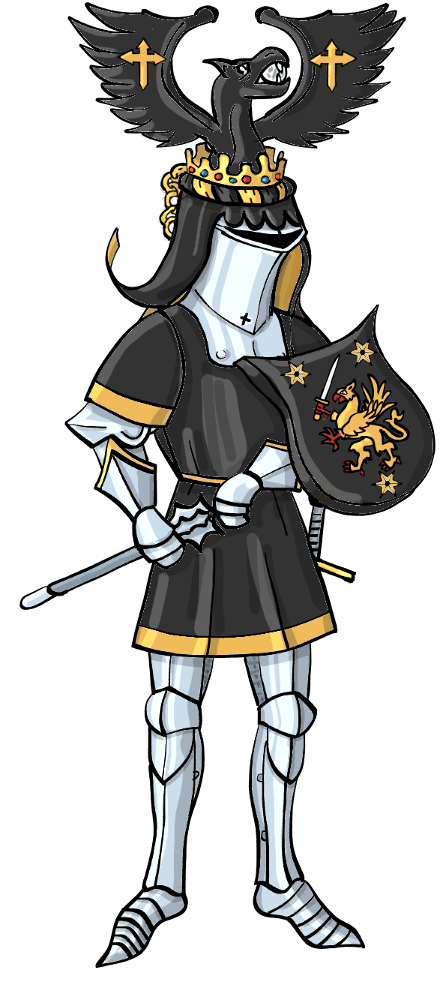

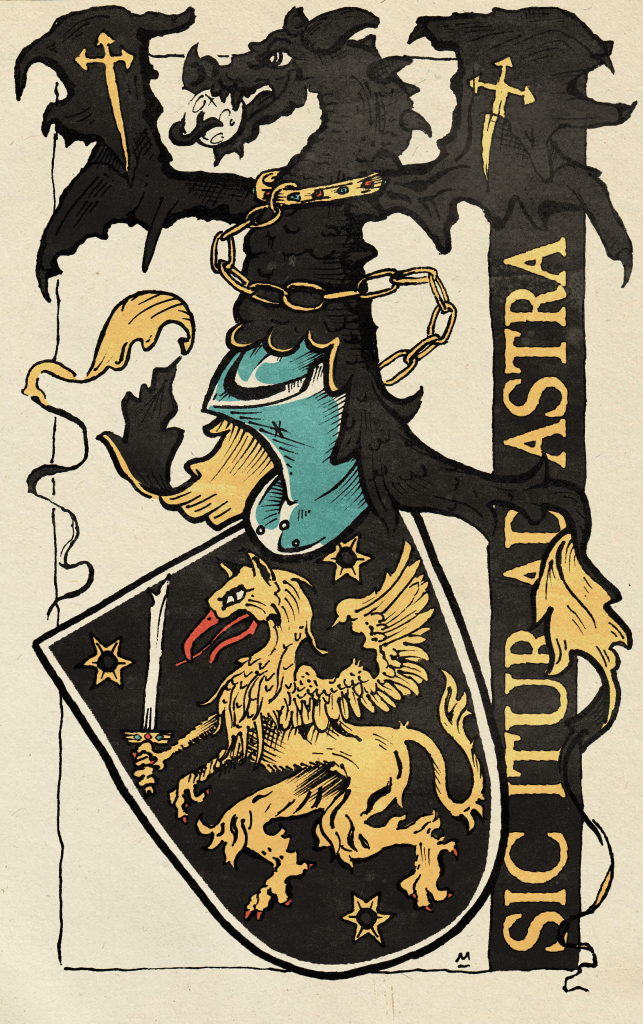
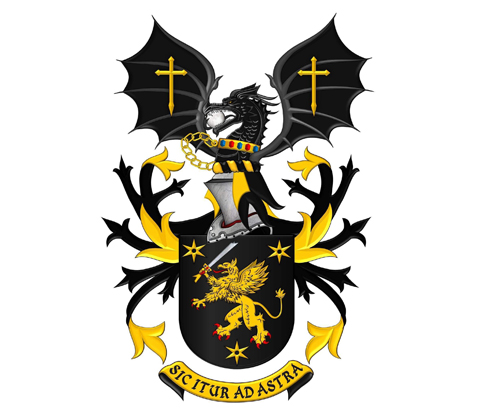
Description and symbolism: Shield: The black shield is canting to the Arrmiger’s surname, translated from a Romance language meaning “hardness”, i.e., as hard as a black volcanic rock, symbolizing a hardened shield that protects the Armiger.
The gryphon combines the head of an eagle and the body of a lion: common heraldic symbols of power, strength, and courage, seen for example in the imperial eagle of the Holy Roman Empire and the lion rampant of Scotland. Together they allude to fearless courage and unrelenting strength.
The gold-jeweled Kampilan wielded by the gryphon symbolizes destiny being wielded by the Armiger. It is also a representation of Filipino heritage.
The three pierced stars represent the Armiger’s three personal virtues: persistence, perseverance, and patience. The piercing alludes to the Armiger’s humanity: that there are difficult times when these virtues are bypassed, like entering a blackhole in the endless Universe. But like stars in the night, these virtues are always shining and present in the infinite void of never ending hardships. With six points, the stars make the Armiger’s favorite shape.
Crest: The legendary moon-eating dragon of Philippine folklore, the Bakunawa, represents the Armiger’s Filipino heritage. The moon being swallowed recalls the Armiger’s crave for Chinese mooncakes, especially with ube or purple yam flavors.
The Armiger further refers to several world leaders in the crest. The gold-jeweled collar and chain symbolize the Armiger overcoming insurmountable obstacles along his way, much like how Theodore Roosevelt is depicted as tying up the bear of “good” trust in overcoming vice and greed. The proportions are reminiscent of the German heraldic tradition, coinciding with the dragon’s black color representing Prussia and Otto von Bismarck, the unifier of Germany. The two cross-like figures on the dragon’s wings recall the leadership of Prime Minister Lee Kuan Yew taking Singapore from third world to first, guided by the two principles of reason and reality. The crosses have six arrowheads, representing the Six Arrows of Kemalism, the political ideology of Mustafa Kemal Atatürk, founder of the Republic of Turkey and one of history’s greatest reformers and nation-builders.
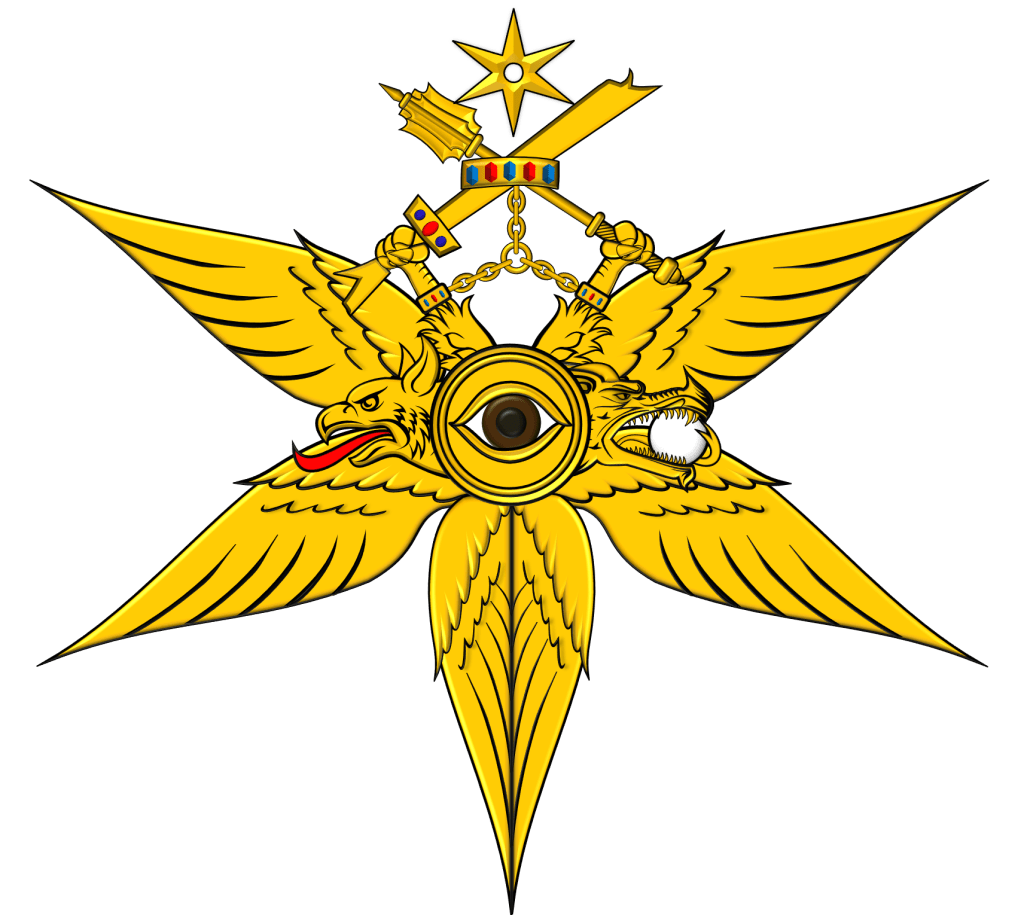
Badge: The Stellar Seraphim, a six-winged being with the heads of a gryphon and a Bakunawa, wielding the Kampilan and a golden mace while being chained in both hands by a gold-jeweled collar topped with a pierced mullet.
Motto: The motto is taken from Virgil’s Aeneid.
Blazon: Shield: Sable, a griffin segreant Or, armed and langued Gules and bearing a kampilan bladed Argent, jeweled in hilt, in between three mullets of six points pierced Or.
Crest: A dragon’s head couped Sable, swallowing a moon Argent and gorged of a collar Or jeweled Azure and Gules and chained Or, between two dragon wings Sable each charged with a cross barb fitchy Or.
Motto: Sic itur ad astra (“Thus one goes to the stars”).
Assumed/granting authority: Assumed, January 11, 2017. Registered, Philippine Armorial, August 10, 2024.
Image and information submitted by the Armiger.
 Philippine Armorial